Kunafa is a traditional Middle Eastern dessert known for its rich, sweet flavor and unique texture. There are two main types of kunafa: plain and with nuts.
Plain kunafa is typically made with a base of shredded phyllo dough or semolina, which forms a crispy and golden crust when baked. The filling is usually made from a mixture of sweetened cheese, such as Nabulsi or Akkawi cheese, providing a creamy and slightly salty contrast to the sweetness of the dessert. After assembling the kunafa, it is baked until the crust is golden brown and crispy, then a fragrant sugar syrup is poured over the hot pastry, allowing it to absorb the syrup and adding extra sweetness and moisture to the dessert.
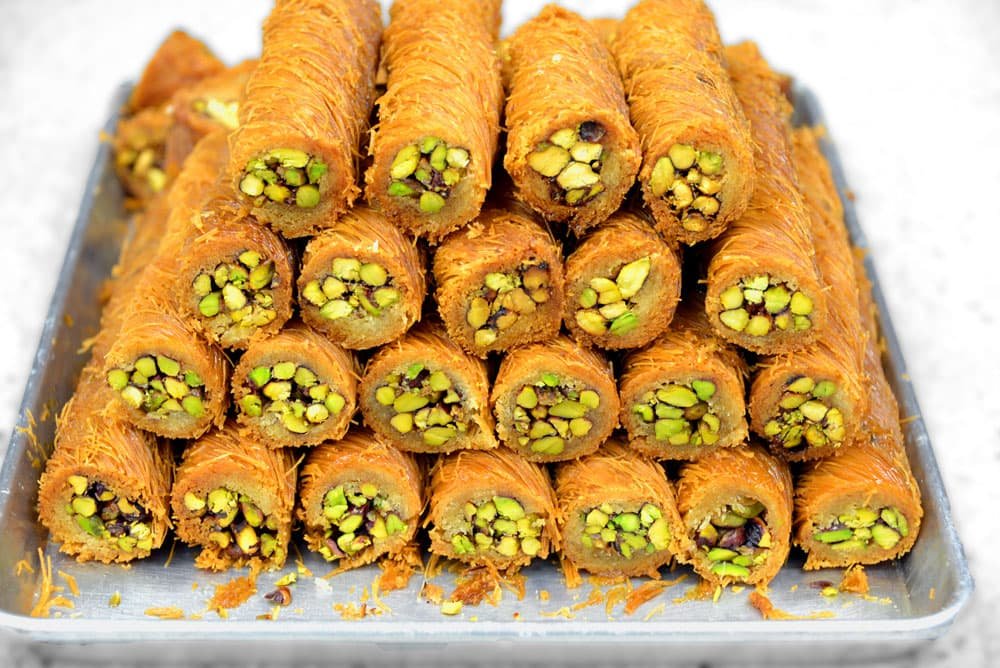
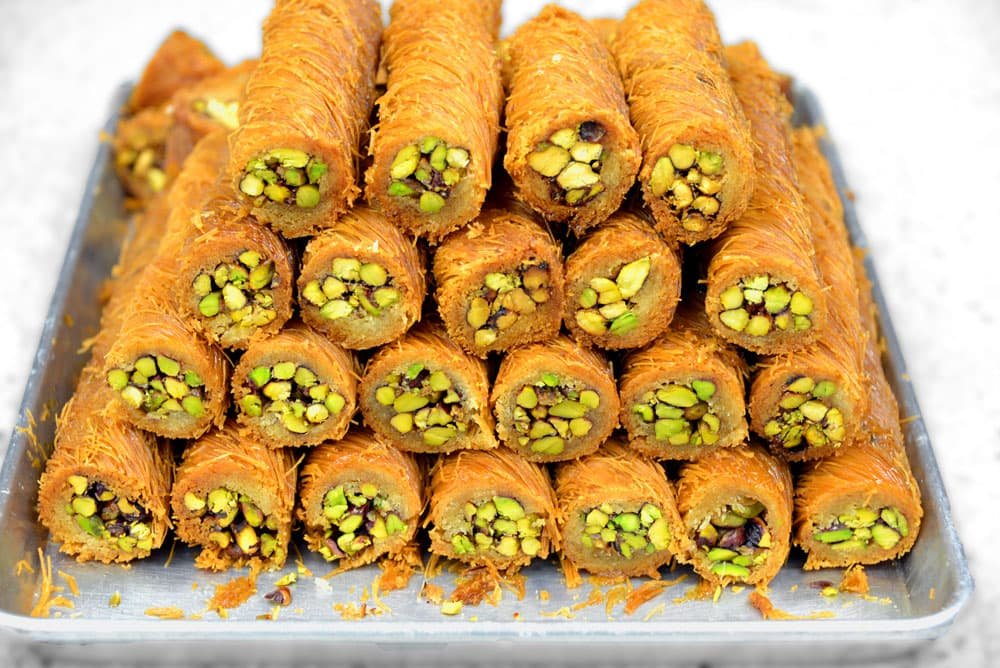
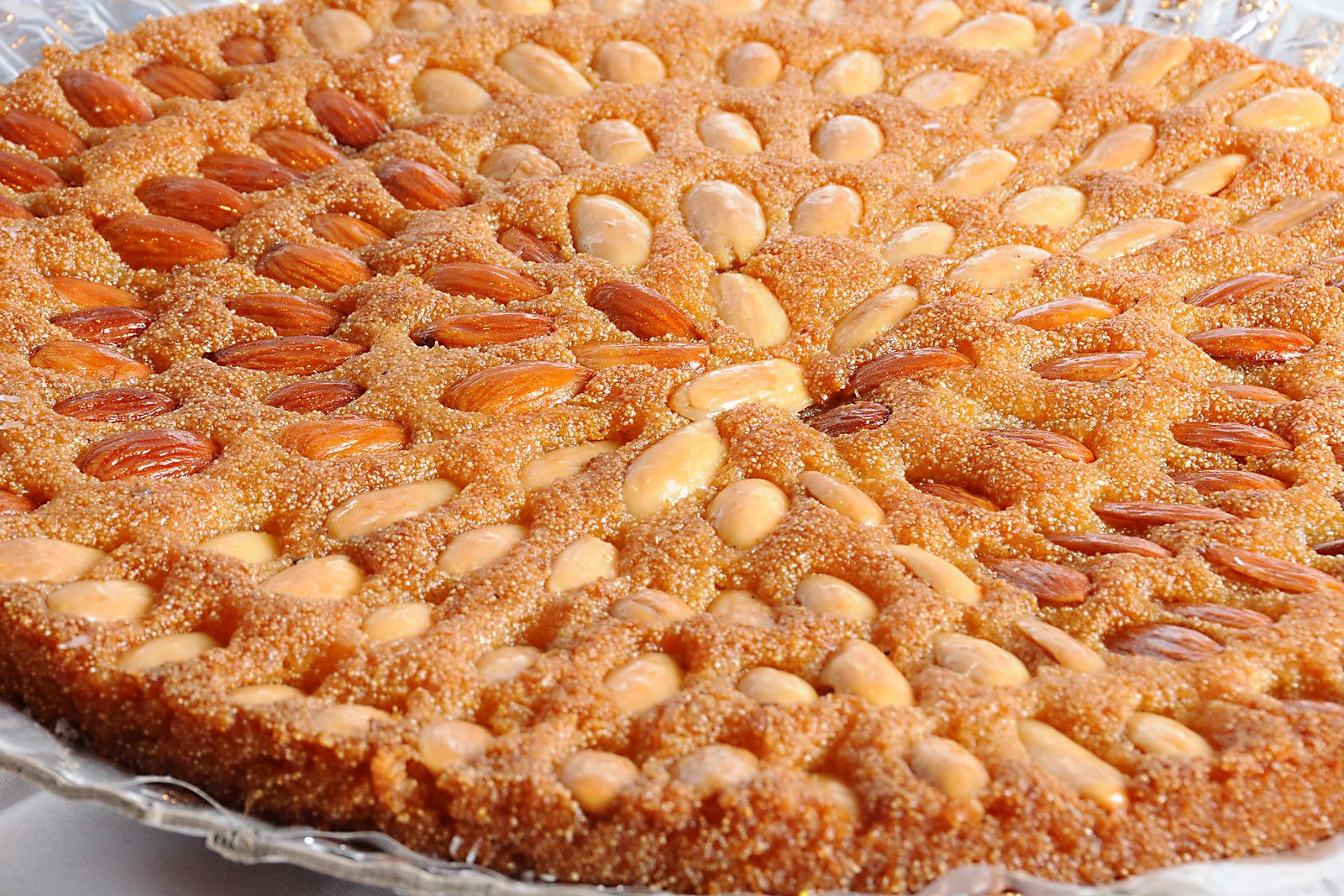
On the other hand, nut-filled kunafa involves adding a layer of chopped nuts, such as pistachios, almonds, or walnuts, before covering them with another layer of phyllo dough or semolina. The nuts add a rich and nutty flavor to the dessert, complementing the sweetness of the pastry and providing a satisfying crunch with every bite.
To prepare kunafa, start by preheating the oven and preparing the filling. Then, layer the shredded phyllo dough or semolina in a baking dish, making sure to brush each layer with melted butter or ghee to create a crispy and golden crust. Once the base is ready, add the cheese filling or a layer of nuts, followed by another layer of dough. After baking, the kunafa is generously drizzled with sugar syrup, infusing the dessert with sweetness and moisture.
Kunafa, whether plain or with nuts, is a beloved dessert in Middle Eastern cuisine, often enjoyed during special occasions and celebrations. Its combination of crispy, buttery layers, creamy cheese or nut filling, and sweet syrup makes it an irresistible treat for those with a sweet tooth.
Kunafa is a traditional Middle Eastern dessert known for its rich, sweet flavor and unique texture. There are two main types of kunafa: plain and with nuts.
Plain kunafa is typically made with a base of shredded phyllo dough or semolina, which forms a crispy and golden crust when baked. The filling is usually made from a mixture of sweetened cheese, such as Nabulsi or Akkawi cheese, providing a creamy and slightly salty contrast to the sweetness of the dessert. After assembling the kunafa, it is baked until the crust is golden brown and crispy, then a fragrant sugar syrup is poured over the hot pastry, allowing it to absorb the syrup and adding extra sweetness and moisture to the dessert.
On the other hand, nut-filled kunafa involves adding a layer of chopped nuts, such as pistachios, almonds, or walnuts, before covering them with another layer of phyllo dough or semolina. The nuts add a rich and nutty flavor to the dessert, complementing the sweetness of the pastry and providing a satisfying crunch with every bite.
To prepare kunafa, start by preheating the oven and preparing the filling. Then, layer the shredded phyllo dough or semolina in a baking dish, making sure to brush each layer with melted butter or ghee to create a crispy and golden crust. Once the base is ready, add the cheese filling or a layer of nuts, followed by another layer of dough. After baking, the kunafa is generously drizzled with sugar syrup, infusing the dessert with sweetness and moisture.
Kunafa, whether plain or with nuts, is a beloved dessert in Middle Eastern cuisine, often enjoyed during special occasions and celebrations. Its combination of crispy, buttery layers, creamy cheese or nut filling, and sweet syrup makes it an irresistible treat for those with a sweet tooth.
Fresh
Fast delivery
Contact us for help