

How to bargain correctly at the market in Hurghada: 7 Detailed Profitable Tips
To bargain properly at the Hurghada market, you need to understand local customs and use effective strategies. This will allow you not only to save money, but also to enjoy the process. Successful negotiations require patience and friendliness.
Trade is an integral part of Egyptian culture, especially in tourist markets. Mastering this skill will greatly improve your shopping experience. Using the right approaches, you can achieve profitable deals.
How to bargain correctly at the market in Hurghada: basics and psychology
Understanding the basics of trading and seller psychology is a key factor for success. Bargaining in Egypt is not just a price reduction, but an entire art of communication. Sellers expect buyers to haggle and often inflate the starting price.
Your goal is to find a middle ground that will be beneficial to both parties. This requires patience, politeness and the ability to read the situation. In addition, it is important to remember cultural differences.

Psychology of seller and buyer
A seller in Hurghada sees bargaining as an opportunity to establish contact. He appreciates your attention and interest in his product. Therefore, you should not immediately show aggression or impatience.
- Smile and politeness: Always start with a friendly greeting. This creates a positive atmosphere.
- Show interest, but not despair: The seller must see that you like the product, but you are not ready to pay any price.
- Play a role: Pretend that you have doubts or that you have a limited budget. This may push the seller to make concessions.
- Patience: Take your time. The bidding process may take some time, and this is normal.
Remember that for the seller this is his bread. He wants to sell, and you want to buy profitably. Find a compromise that suits everyone. For example, when purchasing several souvenirs, you can ask for an additional discount for volume.
Preparing for trading: what you need to know before going to the market
Effective preparation greatly increases your chances of successful bargaining. First of all, study the approximate prices of the products you are interested in. This can be done by visiting several stores with fixed prices or simply walking through the market without the intention of buying.
Knowing the true value will help you determine a reasonable trading range. In addition, it is important to choose the right time to visit the market. Morning hours are often more profitable, as sellers are eager to make the first deal of the day, considering this a good sign.
Price research and timing
Before you start trading actively, do some research. Visit several shops, ask about prices, but don’t rush to buy. Remember or write down the average values.
- Comparison: Visit different stores to get an idea of the price range. This will give you an advantage.
- Morning or evening: In the morning, sellers are more accommodating. In the evening, before closing, you can also get a discount.
- Local currency: Always carry Egyptian pounds with you. Paying in dollars or euros is often less profitable due to the unfavorable exchange rate.
It is also useful to know a few phrases in Arabic, such as “How much is it?” (kam sa'ar?) or "Expensive" (gali). This will show your respect for the local culture and may endear you to the seller. Remember that on the market in Egypt you can find a lot of interesting things, from spices to textiles.
Plan your trip to the market so that you have enough time. Haste is your enemy in the bargaining process. If you are in a hurry, the seller will sense this and be less inclined to make concessions. On the contrary, if you have time, you can safely leave and come back later if the price does not suit you. This demonstrates your independence and strengthens your position. For example, many tourists like to visit Mini Egypt Park, where you can see miniature replicas of attractions, and then go to the market for souvenirs inspired by what you saw.
Strategies for successful bargaining: from the first offer to the deal
Bargaining is a dialogue, and every stage matters. Your goal is not just to reduce the price, but to do it elegantly and efficiently. Start with an offer that is well below the seller's asking price, but not offensively low. As a rule, this is 30-50% of the original cost.
The seller will most likely refuse, but this is the beginning of negotiations. Gradually raise your price, and the seller will lower his. This process may involve several rounds of proposals and counterproposals. It is important to remain calm and not show too much desire to buy the product.
Step-by-step approach to trading
Follow these steps to maximize your chances of success:
- Initial sentence: Offer a price that is about half or a third of the stated price. This leaves a lot of room for maneuver.
- Gradual increase: Don't take big steps. Increase your price by small amounts, such as £5-10.
- Imitation of care: If the seller does not budge, pretend that you are ready to leave. This often forces him to offer a better price.
- Compromise: Be prepared to compromise. An ideal deal is when both parties feel like winners.
Sometimes the seller may offer you tea or coffee. Accept it as a sign of hospitality, but don't feel obligated to buy. This is part of the ritual. Remember that the ability to bargain correctly on the market in Hurghada comes with experience. Don't be afraid to experiment with different approaches.
If you are purchasing multiple items, try to negotiate a package price. For example, if you want to buy three scarves, ask how much the whole lot will cost. Often sellers are willing to give an additional discount for bulk purchases. This is especially true if you are looking for souvenirs for friends and family. For example, you can find interesting products on various market sections, featuring handicrafts and local delicacies.
Common mistakes and how to avoid them
Even experienced travelers sometimes make mistakes when trading. One of the most common is the manifestation of excessive enthusiasm. If the seller sees that you are in love with the product, he will be less inclined to reduce the price. Therefore, try to maintain a neutral expression and not admire the product too much.
Another mistake is lack of patience. Bargaining is a process that takes time. If you're in a hurry, you'll likely overpay. Also avoid starting a trade if you don't actually intend to buy. This can upset the seller and ruin your reputation.
What not to do when bargaining
To avoid common pitfalls, follow these guidelines:
- Do not show money in advance: Keep the money in your wallet and take it out only when you agree on a price.
- Do not insult the seller: Even if the price seems too high, remain polite. Being rude will not help you get a discount.
- Don’t haggle over small things: For very cheap goods, haggling can be inappropriate and even offensive.
- Don't forget about cultural norms: Respect the seller and his time.
It is also important not to fall for the tricks of sellers who may try to make you feel guilty or pity. Remain firm in your intentions, but always be polite. Remember that the goal is a good deal, not a conflict. For example, if you are planning to visit Hurghada Grand Aquarium, do not forget that souvenirs there can be more expensive than at the market, so it is better to bargain for them separately.
Cultural nuances: respect and etiquette when trading
Understanding and respecting local cultural norms plays a huge role in successful trading. In Egypt, bargaining is not just a business transaction, but a social interaction. Sellers value respect and friendliness. Start the conversation with a greeting, rather than immediately asking about the price. Use phrases like “Salaam alaikum” (peace be upon you) and “Shukran” (thank you).
Remember that the Egyptians are very hospitable. Offering tea or coffee is a sign of respect, and refusing may be perceived as impolite. Even if you don't want to drink, accept the offer and take a couple of sips. This will create a warmer atmosphere for bargaining.
Rules of behavior on the market
- Greeting: Always start with a friendly greeting.
- Personal space: Keep your distance. Do not touch the seller unless necessary.
- Clothing: Dress modestly, especially women. This will show your respect for local traditions.
- Photos: Ask permission before taking photographs of people or their shops.
Bargaining in Egypt is a kind of game where not only numbers are important, but also emotions. If you show that you value the process and are respectful, the seller will be more willing to make concessions. This is especially important when you want to haggle at the Hurghada market for expensive goods such as jewelry or carpets. For example, if you are planning a day trip to Luxor and Dendera, you will notice that similar trading rules apply in the markets there, and etiquette plays an equally important role.
What to buy and where: the best places for profitable shopping
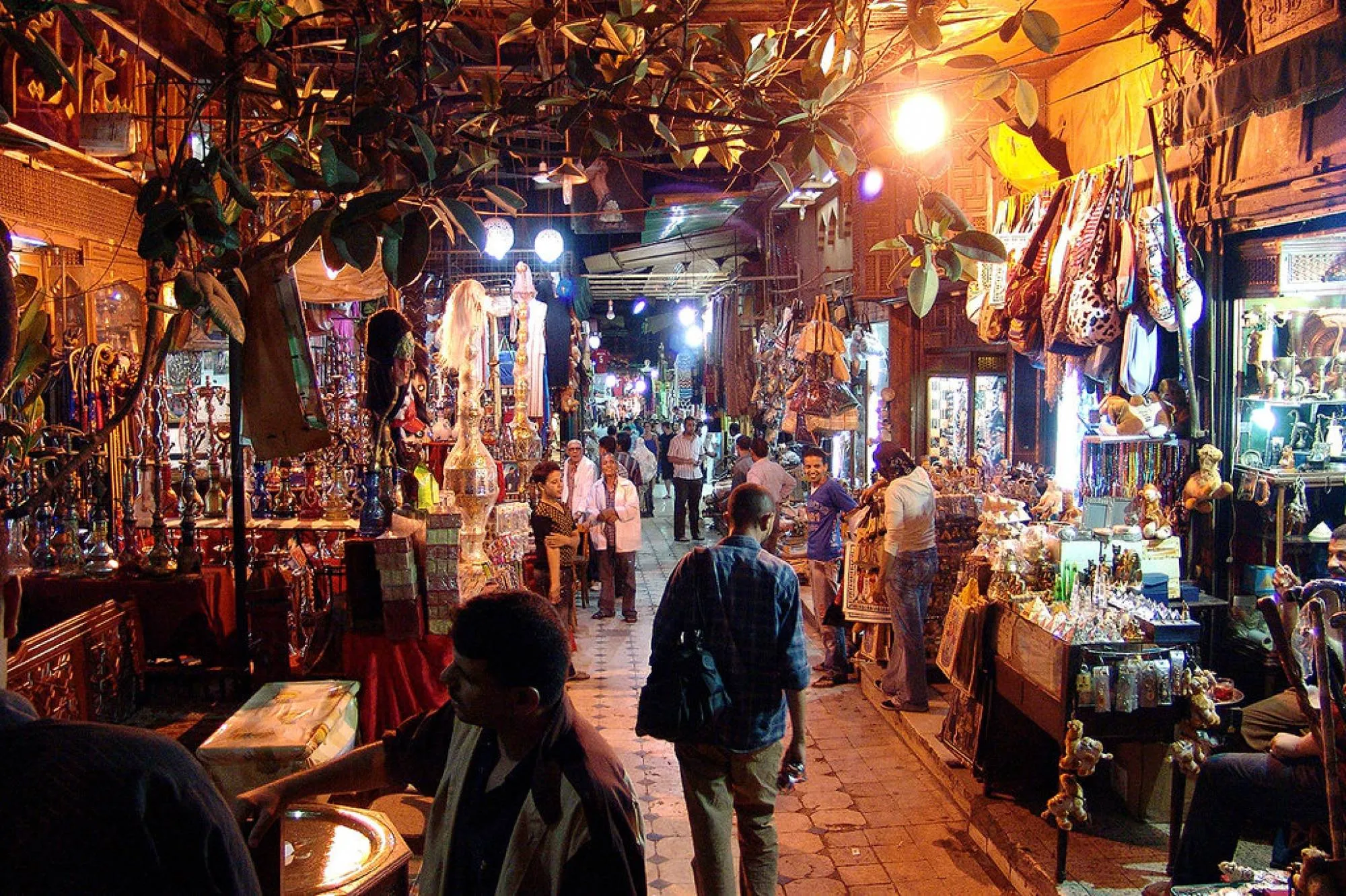
Hurghada offers a wide range of goods, from traditional souvenirs to jewelry. Knowing what and where to buy will help you focus on the best deals and avoid overpaying. The most popular products are papyri, spices, aromatic oils, cotton clothing, leather goods and traditional hookahs.
Central markets such as El Dahar (Old City) are the best places to bargain. There is more competition among sellers, which usually results in lower prices. In tourist areas, prices may be higher and sellers may be less willing to bargain.
Recommended products and places
- Papyri: Look for genuine papyri, not banana leaves. Real papyrus does not tear or crack when bent.
- Spices: Buy in bulk to get fresh and aromatic spices at the best price.
- Cotton: Egyptian cotton is famous for its quality. Look for bed linens, towels and clothing.
- Jewelry: If you buy gold or silver, make sure that the purity is available.
Feel free to compare prices in different stores. Even if you find something you really like, shop around the market again to make sure you're getting the best price. Remember that how to bargain at the Hurghada market is a skill that can be applied to a wide range of goods. For example, when visiting Dendera and Abydos, you can also find unique souvenirs where bargaining would be appropriate.
In addition to traditional markets, it is worth paying attention to specialized stores if you are looking for a specific product. For example, to buy high-quality oils and perfumes, it is better to visit trusted perfume shops, where bargaining is also possible, but with a smaller range. Such places usually offer higher quality products. However, if you want to buy souvenirs or clothes, markets remain your best bet. For example, in El Gouna, although there are shops with fixed prices, you can always try your hand at bargaining at local bazaars.
Frequently asked questions about how to bargain correctly at the market in Hurghada
What is the usual discount when trading in Hurghada?
You can usually get a discount of 30% to 50% off the original price. Sometimes, with a large purchase volume or at the end of the day, the discount may be greater. It all depends on your bargaining ability and the mood of the seller.
Is it possible to bargain in supermarkets or stores with fixed prices?
No, it is not customary to bargain in supermarkets, pharmacies and stores with clearly indicated prices. Bargaining is only appropriate in markets, souvenir shops and small private shops.
What to do if the seller does not want to give in?
If the seller categorically does not give in, you can try to pretend that you are leaving. This often forces him to offer a better price. If this does not help, perhaps you should look for a similar product in another store.
Do you need to have small money for bargaining?
Yes, it is always useful to have small Egyptian pound notes. This simplifies the payment process and avoids problems with delivery. Large bills can be a hassle, especially if you're buying something inexpensive.
Can sellers deceive tourists?
Unfortunately, this happens. To avoid being scammed, always check the product before purchasing, especially the quality and quantity. Be careful when calculating and do not rush. If something seems too good to be true, it probably is.
How long can the bidding process take?
The bargaining process can last from a few seconds to several minutes, depending on the product and the mood of the parties. The main thing is to take your time and enjoy the communication. This is part of the local color.
Is it worth bargaining if the product is very cheap?
It is not worth bargaining for very cheap goods (for example, a bottle of water or a small trinket). This can be perceived as petty and disrespectful. Bargain for goods whose value is tangible to you.
Is it possible to bargain for excursions or services?
Yes, you can and should bargain for excursions, taxis and various services. This is especially true for private offers, and not for the services of large tour operators. Always check the final price before agreeing.
Output
How to bargain correctly at the market in Hurghada is not only a way to save money, but also a unique cultural experience. By applying these tips, you can enjoy the process and make profitable purchases. Remember to be polite, patient and aware of local customs.
Don’t be afraid to start bargaining, because it’s part of the local flavor. Use the knowledge you gain to make your shopping experience in Hurghada unforgettable and profitable. Good luck on your adventures in the Egyptian markets!